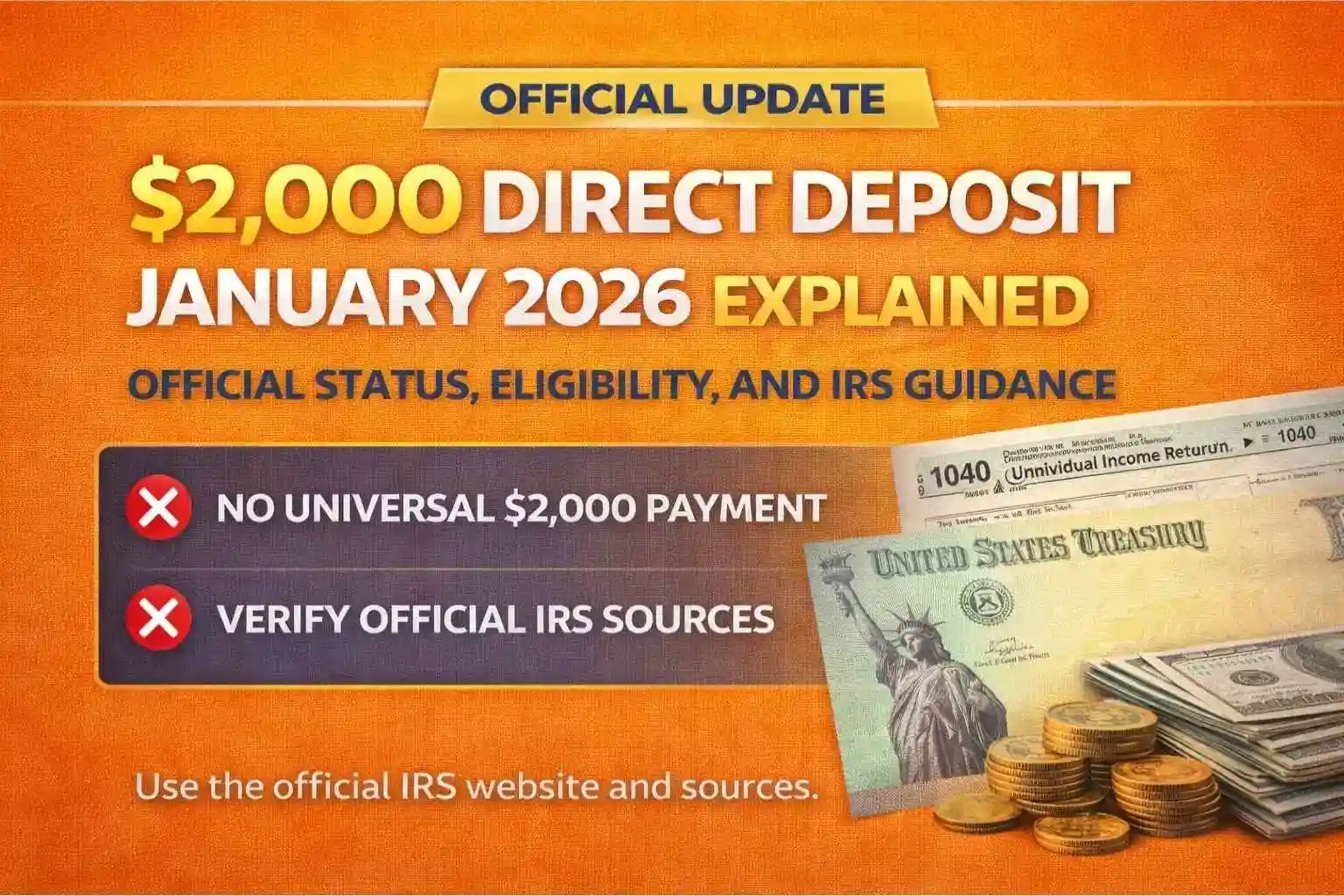
Reports about a $2,000 direct deposit in January 2026 have spread widely online, leading many taxpayers to search for confirmation. Some posts suggest a new federal payment or special deposit from the government. To avoid confusion, it is important to rely only on verified information from the Internal Revenue Service (IRS). This article explains the official status, who might qualify for federal payments, and how IRS direct deposits actually work.
Is the $2,000 Direct Deposit Official
As of now, there is no automatic or universal $2,000 payment announced for all taxpayers. The IRS does not send large direct deposits without congressional approval or an authorized federal program.
In many cases, viral claims confuse tax refunds, credits, or past relief programs with new payments. Any official payment must be confirmed through legislation and published directly by the IRS. Without that confirmation, broad claims about fixed deposits should be treated carefully.
$2,000 Payment Claims Overview
| Claim | Official Reality | What It Means |
|---|---|---|
| $2,000 for everyone | Not confirmed | No universal deposit |
| IRS sending bonuses | Not standard policy | Refunds only |
| Automatic eligibility | Not applicable | Depends on tax filing |
| Payment date rumors | Unverified | Follow IRS notices |
| Direct deposit | Used for refunds | Not special checks |
How IRS Direct Deposits Actually Work
The IRS regularly uses direct deposit to send tax refunds, credits, and certain approved benefits. These payments are tied to individual tax returns, not automatic flat amounts.
If someone overpays taxes during the year or qualifies for refundable credits, the IRS may issue a refund. The amount depends on income, withholding, and credits claimed. This is why refund amounts vary from person to person rather than matching a fixed number like $2,000.
Direct deposit is simply a delivery method. It does not indicate a new stimulus or bonus payment.
Who Might Receive Federal Payments
Some taxpayers may still receive deposits in January due to normal IRS processes. These can include delayed refunds, amended return payments, or credits from recently filed returns.
Eligibility depends on tax records, not public announcements. Individuals who recently filed taxes or corrected information might see deposits that appear unexpected. However, these are personal refunds rather than nationwide programs.
To verify any deposit, taxpayers should check their IRS account or official correspondence. The IRS website provides the most reliable updates.
Payment Timing and Schedule
IRS refunds are generally processed after tax returns are reviewed and approved. Direct deposits may take several days or weeks, depending on the filing method and verification steps.
There is no fixed January schedule for special deposits. Payments are issued individually as returns are processed. Holidays and banking delays may also affect timing. Checking refund status through official IRS tools is recommended.
Do Taxpayers Need to Apply
There is no application required for a special $2,000 payment because no official program exists. Taxpayers only need to file their normal tax return to receive eligible refunds or credits.
Be cautious of websites or messages requesting fees or personal information to claim payments. The IRS does not charge to release refunds and does not contact taxpayers through unofficial channels.
Key Points to Remember
- No confirmed $2,000 universal deposit
- IRS sends refunds based on tax records
- Amounts vary by individual
- Direct deposit is a payment method only
- Always verify through official IRS sources
Conclusion
The $2,000 direct deposit rumors for January 2026 appear to be based on misunderstandings rather than confirmed federal action. While some taxpayers may receive refunds or credits, these payments depend on individual tax filings, not a nationwide program. Relying on official IRS guidance helps avoid confusion and scams. For accurate updates, always check trusted government sources.
Disclaimer
This article is for informational purposes only and does not constitute financial, legal, or tax advice. Always rely on official government sources such as the IRS for accurate information.
FAQs
1. Is the $2,000 payment confirmed by the IRS?
No, there is no official universal $2,000 deposit program.
2. Why did someone receive a deposit in January?
It was likely a tax refund or credit.
3. Do I need to apply for this payment?
No application exists for a special deposit.
4. How are IRS refunds calculated?
Based on income, withholding, and eligible tax credits.
5. Where can I check official updates?
Use the official IRS website or your IRS account.