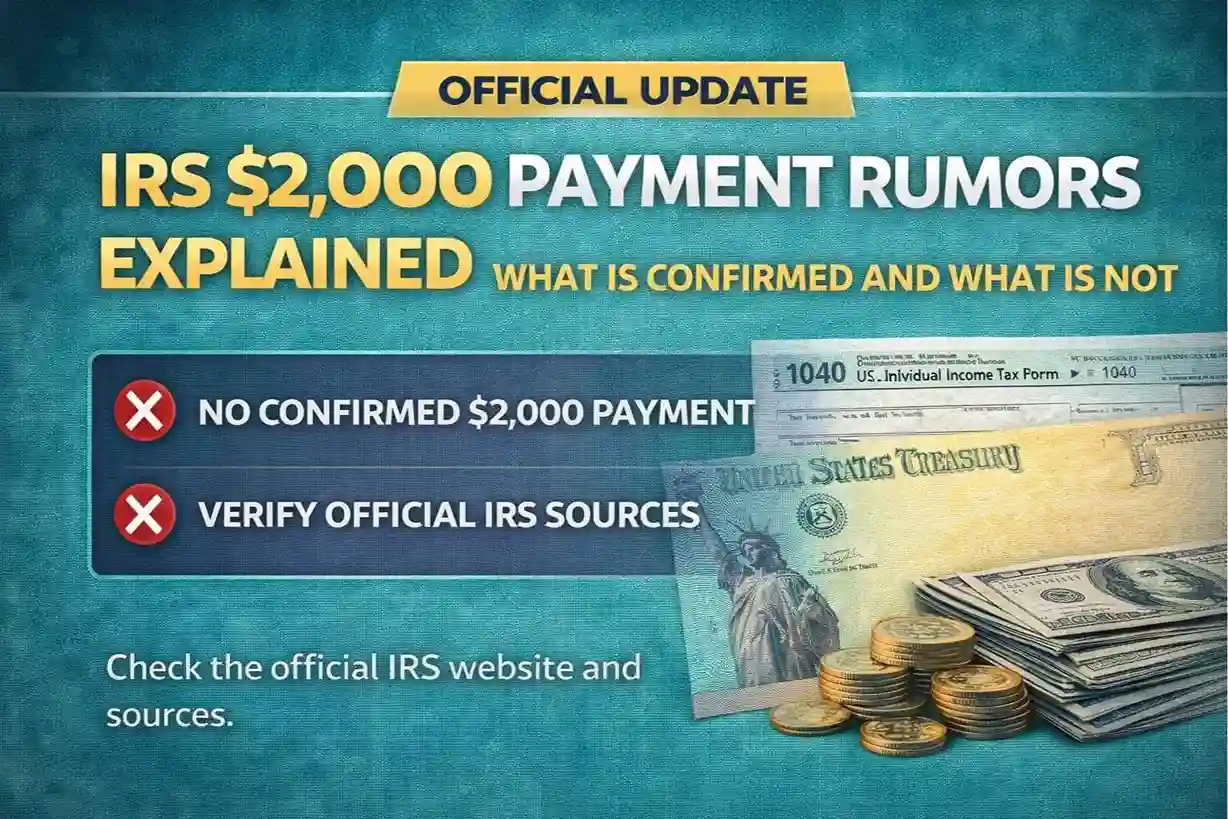
Online discussions about an IRS $2,000 payment have confused many taxpayers. Social media posts and websites often claim that a new federal deposit or bonus payment is coming soon. However, not all such claims are accurate. The Internal Revenue Service (IRS) only issues payments through officially approved tax refunds, credits, or government programs. This article explains what is confirmed, what remains unverified, and how IRS payments actually work.
Why the Rumors Started
Payment rumors often spread during tax season or after major government relief programs. In the past, stimulus checks and special credits created expectations that similar payments may return. When people see large refund amounts or delayed deposits, they sometimes assume a new program exists.
In most cases, these claims are misunderstandings. The IRS does not send fixed payments to everyone unless Congress passes a law approving them. Without official announcements, broad payment claims should be treated carefully.
$2,000 Payment Claims vs Reality
| Claim | Official Status | Explanation |
|---|---|---|
| $2,000 for all taxpayers | Not confirmed | No universal payment |
| IRS bonus checks | Not standard | Refunds only |
| Automatic eligibility | False | Based on tax records |
| Fixed payment dates | Unverified | Varies by filing |
| Direct deposit alerts | Normal refunds | Not special programs |
What Payments Are Actually Confirmed
The IRS regularly sends money through normal processes such as tax refunds, earned credits, and approved benefit programs. These payments depend on individual tax returns and financial information.
For example, if someone overpaid taxes or qualifies for refundable credits, the IRS may issue a refund. The amount is calculated based on income, withholding, and eligibility. This is why deposits often differ between taxpayers. No fixed amount like $2,000 applies automatically to everyone.
Any official program would be clearly announced through government channels before payments begin.
How IRS Direct Deposits Work
Direct deposit is simply the method used to send refunds quickly to taxpayers’ bank accounts. It does not indicate a special or new payment. When returns are processed, eligible refunds are transferred electronically.
Processing times vary. E-filed returns with direct deposit are usually faster, while mailed returns may take longer. Each payment is tied to the individual’s tax record. The IRS does not randomly issue large deposits outside of this system.
Checking refund status through official IRS tools is the most reliable way to verify a deposit.
How to Verify Official Information
Taxpayers should rely only on official government sources when hearing about new payments. The IRS website, official notices, and verified announcements provide accurate updates.
Be cautious of emails, texts, or websites promising quick payments or asking for personal information. The IRS does not charge fees to release refunds. Sharing sensitive details with unofficial sources may lead to fraud.
Staying informed through trusted channels helps avoid confusion and scams.
Key Points to Remember
- No confirmed universal $2,000 IRS payment
- Refunds depend on individual tax records
- Direct deposit is only a delivery method
- Rumors often misinterpret refunds
- Always verify through official IRS sources
Conclusion
The IRS $2,000 payment rumors appear to be based on misunderstandings rather than confirmed federal action. While many taxpayers may receive refunds or credits, these amounts depend on personal tax information, not a nationwide program. Understanding how IRS payments work can help avoid false expectations. For accurate updates, taxpayers should always rely on official IRS guidance.
FAQs
1. Is the IRS sending a $2,000 payment to everyone?
No, there is no confirmed universal $2,000 payment.
2. Why did someone receive a large deposit?
It was likely a personal tax refund or credit.
3. Does direct deposit mean a new program?
No, it is simply a refund delivery method.
4. Where can I verify payment information?
Use the official IRS website or your tax account.
5. Should I apply for the rumored payment?
No, there is no official application process.
Disclaimer
This article is for informational purposes only and does not constitute financial, legal, or tax advice. Always rely on official government sources such as the IRS for accurate information.