The Social Security payment schedule for 2026 is an important topic for millions of Americans who rely on monthly benefits to cover everyday expenses. Retirees, people receiving Social Security Disability Insurance (SSDI), and Supplemental Security Income (SSI) recipients depend on predictable payment dates to manage bills, rent, and healthcare costs.
Because payments are issued on specific days each month, understanding the schedule helps beneficiaries avoid confusion or delays. The Social Security Administration (SSA) follows a structured system based primarily on birth dates and benefit type. This guide explains how the 2026 payment calendar works, when deposits arrive, and what recipients should expect throughout the year.
Why Social Security Uses a Scheduled Payment System
The SSA distributes benefits to tens of millions of people every month. To manage this efficiently, payments are spread across multiple days instead of being issued all at once. This staggered system reduces processing delays and ensures funds are delivered reliably.
Payment timing is determined mainly by the beneficiary’s birth date or the type of benefit they receive. For example, SSI payments typically arrive at the beginning of the month, while retirement and SSDI payments are scheduled later in the month. These rules remain consistent each year, including 2026. Although exact dates may shift slightly due to weekends or federal holidays, the overall structure remains the same.
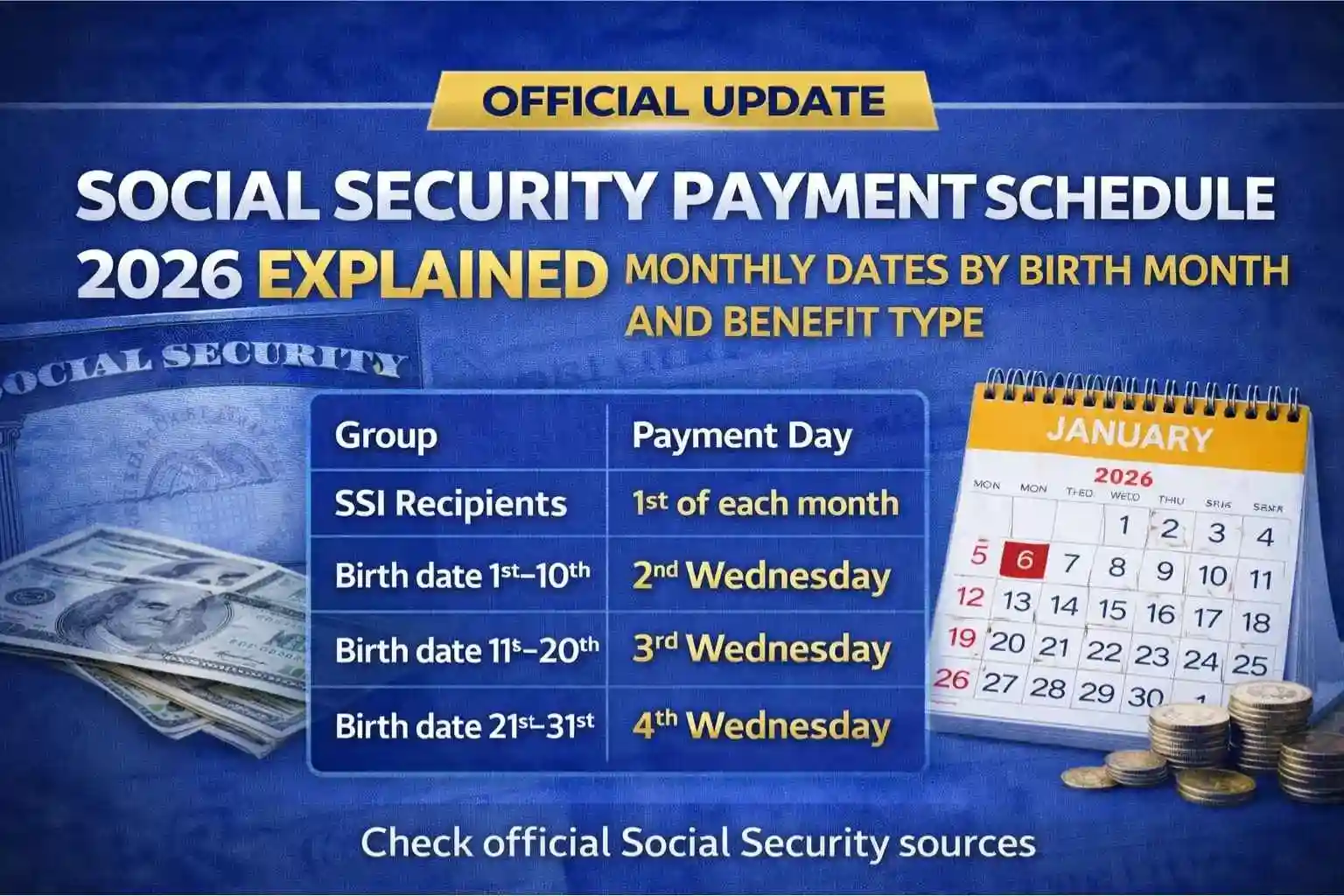
2026 Payment Schedule at a Glance
| Group | Payment Day |
|---|---|
| SSI Recipients | 1st of each month |
| Birth date 1st–10th | 2nd Wednesday |
| Birth date 11th–20th | 3rd Wednesday |
| Birth date 21st–31st | 4th Wednesday |
| Pre-1997 beneficiaries | 3rd of each month |
How Dates Are Assigned by Birth Month
For most retirement and SSDI beneficiaries, payment dates are determined by the day of the month they were born. This rule has been used for many years and continues in 2026.
If a beneficiary’s birth date falls between the 1st and 10th, their payment is typically issued on the second Wednesday of each month. Those born between the 11th and 20th receive payments on the third Wednesday. Individuals born between the 21st and 31st are paid on the fourth Wednesday.
This system helps distribute payments evenly throughout the month. Beneficiaries receive their deposits on the same relative weekday each month, which makes planning easier and more predictable.
SSI and Special Payment Rules
Supplemental Security Income (SSI) follows a slightly different schedule. SSI payments are generally issued on the first day of each month. Because SSI is intended to help with basic living needs, payments are sent earlier than most retirement or SSDI benefits.
If the first day of the month falls on a weekend or federal holiday, SSI payments are issued on the last business day of the previous month. For example, if the first is a Sunday, payment may arrive on the preceding Friday.
Some long-term beneficiaries who began receiving benefits before certain administrative changes may also receive payments on the 3rd of each month. These special cases continue under the same rules in 2026.
What Happens When Dates Fall on Weekends or Holidays
Occasionally, scheduled payment dates may fall on weekends or federal holidays. When this happens, the SSA does not delay payments. Instead, benefits are typically issued on the preceding business day.
For example, if a payment is scheduled for a Wednesday holiday, funds may arrive on Tuesday. This ensures beneficiaries receive their payments without interruption. Direct deposits usually appear immediately on the adjusted date, while mailed checks may take additional time depending on postal delivery.
Because holiday adjustments can vary, checking official SSA calendars or online accounts is recommended to confirm specific monthly dates.
How Payments Are Delivered
In 2026, Social Security benefits continue to be distributed using established methods. Most beneficiaries receive payments through direct deposit, which is generally the fastest and most reliable option. Others may receive funds via a prepaid debit card or, in some cases, a paper check.
Direct deposit allows funds to arrive on the scheduled day without postal delays. Beneficiaries can update their banking information through official SSA accounts. The payment method does not affect eligibility or the amount received, only the speed and convenience of delivery.
Regardless of method, the payment amount and date follow the same schedule determined by the SSA.
Do Beneficiaries Need to Take Action
For the 2026 payment schedule, no action is required for most recipients. The SSA automatically assigns payment dates based on birth date or benefit type. Beneficiaries do not need to apply or register to receive payments on time.
However, it is important to keep contact and banking information updated. Reviewing official SSA notices or logging into an online account can help confirm payment dates. Beneficiaries should also be cautious of scams or unofficial websites claiming to change schedules or request personal information. Only official government channels should be used for account updates.
Key Points to Remember
- Payment dates are based on birth date or benefit type
- SSI is usually paid on the 1st of each month
- Retirement and SSDI payments follow Wednesday schedules
- Holidays may shift payments earlier
- No application is needed for scheduled deposits
Conclusion
The Social Security payment schedule for 2026 follows a structured and predictable system designed to ensure benefits are delivered reliably each month. While exact dates depend on birth month and benefit category, the overall process remains consistent.
Understanding how and when payments are issued can help beneficiaries plan their finances and avoid confusion. For the most accurate information, recipients should consult official calendars and updates provided by the Social Security Administration, which remains the authoritative source for all payment schedules and benefit details.
Disclaimer
This article is for informational purposes only and does not constitute financial, legal, or benefits advice. Always rely on official government sources.